Heavy Demolition Industry Selected Articles
Hydraulic hammers, breakers; boom systems offer secondary breaking options
Rock Products ,
April 1st, 2001 by Carrie Asato
In our latest product round-up, we take a closer look at new products available for breaking oversize rock and concrete
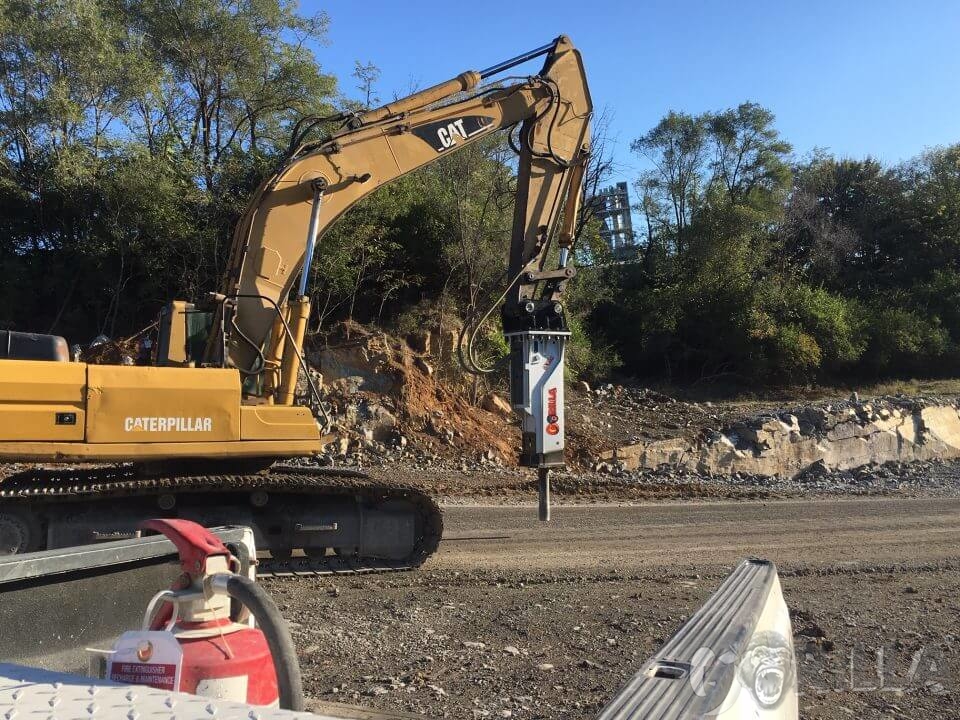
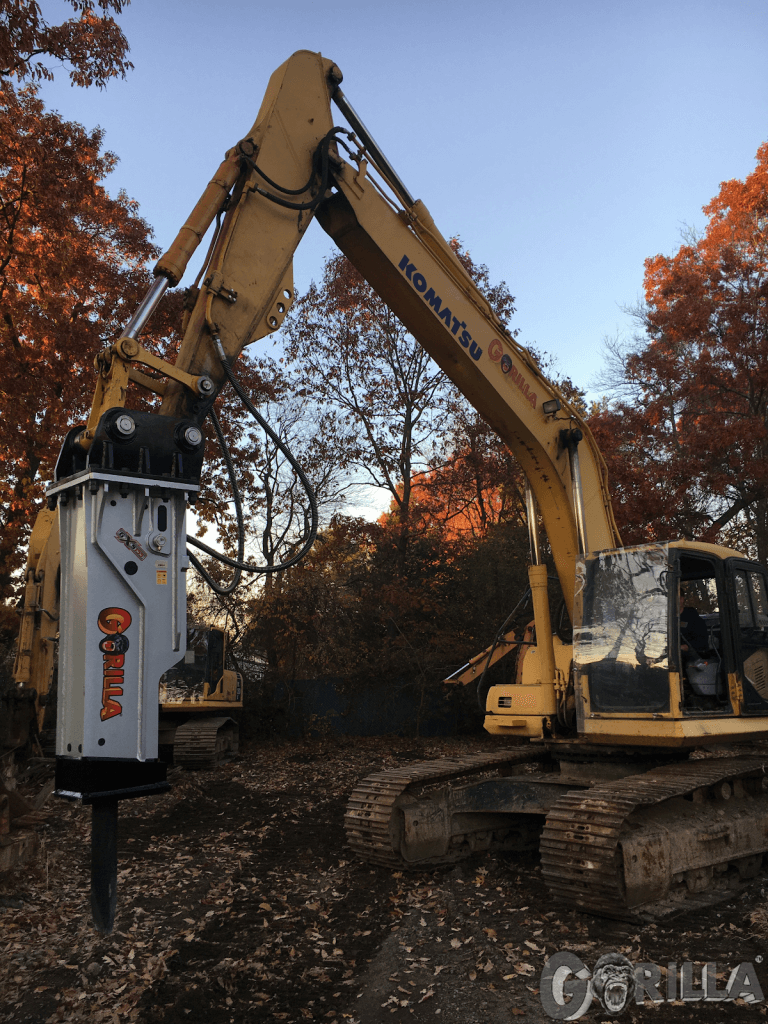
Rammer's Z250 Zoom Boom breaker boom system can be used with stationary or wheel and track-mounted mobile recycling crushers. It is built around S22, S23 or S25 hydraulic hammers that deliver an impact energy of up to 565 ft-lb, equivalent to 481 ft-lb under the CIMA rating system. The 200- to 400-kg class hammers are mounted on a special low-profile boom that adds 220 mm to the height of the carrier machine.
Using a Hydraulic Hammer as a Primary Breaker
Rock Products ,
March 1st, 1998 by Bob Drake
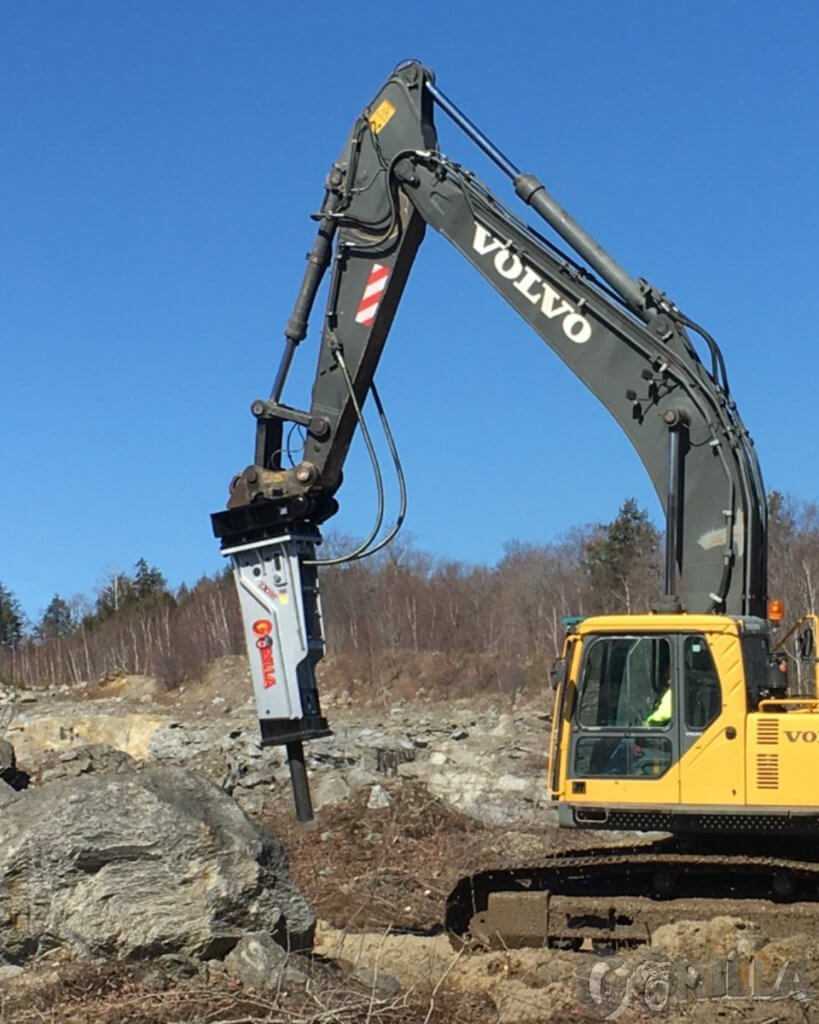
Using a hydraulic hammer instead of explosives to free rock from the quarry face occasionally has been reported in some European operations but is virtually unheard of in North America. However, as hammers and carriers increase in size and durability, sound attenuation is improved, and residential and business developments encroach upon urban quarries, there may be a few applications where hammers work .
According to Krupp Bautechnik, a German manufacturer of hammers, field results reveal five advantages to using a hammer for primary breaking.
Ingersoll-Rand aquires United States distribution rights for Tramac branded Hydraulic Breakers
Hard Hat News,
September 30th, 2005 by Jean Hiller
Ingersoll-Rand Company Limited, a leading diversified-industrial firm, has announced that it has acquired the United States distribution rights to market and sell Tramac branded hydraulic breakers and demolition tools, as well as vibratory compactors and cutting heads, from Tramac Corporation.
Tramac breakers are used as attachments on a range of construction equipment, primarily for construction and demolition projects. In 2004, sales of the products involved in the transaction approximated $18 million.
Atlas Copco's Breaker Features "Heavy-Duty" Technology
Construction Equipment Guide,
August 24th, 2005
With the new MB 700, the engineers at Atlas Copco have developed a lightweight, compact hydraulic breaker with technical features only otherwise found on heavy-duty models. In many disciplines, the new breaker is unique within its class. The MB 700 will be launched worldwide on July 1, 2005.
Torsten Ahr, Product Line Manager at Atlas Copco Construction Tools GmbH, Essen, says: “Our intention with the new MB 700 was not only to show what is technically possible in this breaker class, but also to stick to our policy of setting new trends and offering products which meet our customers’ requirements in all respects. We’ve known for some time that users of medium-duty hydraulic breakers are more discerning than they are frequently given credit for. During our market studies we were surprised to learn that we would be the first company to offer certain technical features in this breaker class. I’m convinced that other manufacturers will have to follow suit shortly, and that the features provided on the MB 700 will soon become standard for this class.”
Allied Shows Off Newest Wares at Cleveland Demo Event
Construction Equipment Guide,
August 24th, 2005
Allied Construction Products LLC held a demo event for its new line of m- and in-Series hydraulic hammers and Ho-Pac plate compactor attachments on July 20 at the company's Marblehead Testing Grounds in Lakeside/Marblehead, OH.
The break down: breakers and hammers take the first steps toward harvesting demolition debris
Construction & Demolition Recycling,
March-April,
2005 by Jackie Gubeno
As the concrete recycling industry grows, breakers and hammers are becoming more and more important on job sites. With many companies choosing to recycle concrete on site, breakers have become an integral part of many recycling operations, as well as popular tools for demolition contractors.
Recyclers rely on breakers and hammers to size slabs of concrete down to fit into crushers for the aggregate market as well as to separate steel from concrete structures for the booming steel scrap market.
Whether used for sizing or separating, breaker attachments continue to play an important role in the changing demolition debris and concrete recycling industries.
Attached at the hip: scrap recyclers and demolition contractors are increasingly relying on hydraulic processing attachments
March, 2005 by Deanne Toto
The demolition scrap stream remains an important source of ferrous and nonferrous scrap, with grades ranging from structural beams to copper wire being pulled from buildings during the demolition process.
As controlled demolition--the technique of using high-reach hydraulic handlers or skid-steer loaders fitted with a variety of attachments to carefully deconstruct a building--gains popularity in North America, so does the importance of having the appropriate battery of attachments to perform a variety of tasks common to many demolition sites.
When coupled with a hydraulic excavator, or even compact excavators and skid steers, the right attachments can increase a demolition contractor's productivity on site and make the recycling of those materials that much easier.
Bringing down the house: excavators provide varied options for demolition and construction contractors and for C&D recyclers
Jan-Feb, 2005 by Jackie Gubeno
Excavators have grappled, sheared, sorted and broken their way into a prominent position in construction, demolition and C&D recycling. With an arsenal of tools at their disposal, these machines continue to play diverse roles in the industry.
Whether digging on the construction site, demolishing a structure or handling debris, excavators come in all shapes and sizes and boast a wide array of distinctive features.
Atlas Copco Construction Tools
Dec , 2004
Atlas Copco Construction Tools Inc. is the world's leading manufacturer of hydraulic breaker and silent demolition tools offering an extensive product line, leading technology and worldwide product support.
Atlas Copco pioneered the development of handheld pneumatic tools in the 19th century, introduced the first hydraulic breaker in the early 1960s and with the acquisition of Krupp hydraulic hammers in 2002, became the world's largest manufacturer of hydraulic hammers.
Beyond heavy lifting: loaders perform a variety of tasks from material handling to primary demolition
Nov, 2004 by Deanne Toto
The loaders employed at recycling facilities and at construction and demolition recycling sites perform a variety of material handling tasks, but their usefulness goes far beyond loading processing equipment and outbound trucks.
It's this versatility that many manufacturers are keeping in the forefront as they design the next generation of material handling equipment, whether they be wheel loaders or skid-steer loaders.
Kubota unveils first zero tail swing excavator
Sept, 2004 by Dawn M. Geske
Kubota Tractor Corp. has expanded its compact equipment line to include its first zero tail swing excavator, the U35. The new excavator joins the third generation of enhancements made to the company's KX series of conventional swing excavators, along with upgrades throughout its Super Series wheel loader range.
Right the first time: a crushing equipment supplier offers factors to consider when buying a crusher
Sept-Oct, 2004 by Jack Byrne
The following feature is based on a presentation prepared by Jacky Alix of Sandvik AB and edited by Sandvik's Jack Byrne.
Real business don't have money to waste on purchasing the wrong equipment for the job. The decision on what type of crusher to buy in order to meet recycling requirements needs to be correct the first time.
Your Arsenal: a variety of attachments are being put to work on demolition sites as controlled demolition grows in popularity
July-August, 2004 by DeAnne Toto
As controlled demolition--using a high-reach hydraulic excavator fitted with a variety of attachments to carefully demolish a building--gains popularity in North America, so does the importance of having the appropriate battery of attachments to perform a variety of tasks common to many demolition sites.
What it's worth: correctly estimating a demolition project almost always separates success from failure
July-August, 2004 by Bill Gumbiner
Successful demolition estimating is a process of using the organization's past project performance data along with checking and re-checking all items that will affect the final price of the estimate.
The estimator must determine whether the price developed looks reasonable, based on the organization's past experiences.
Demolition projects continue to yield recyclable materials for savvy contractors - Demolition Recycling Trends
January, 2004 by William Turley
Those not as familiar with current demolition practices probably conceive of demolished buildings as large piles of rubble and debris that will soon head to a landfill. Not that many years ago, this simplified summary may have been true more often than not. But contractors continue to expand the range of recyclable materials they harvest from demolition sites and continue to work with subcontractors and equipment manufacturers to develop more efficient and thorough on-site recycling techniques.
Armed & Ready: the right arsenal of attachments can help a contractor maximize efficiency and profitability
July-August, 2003 by Deanne Toto
Attachments are the key to successful demolition and recycling operations. Using the right tool for a particular job can increase an operation's efficiency and profitability.